| From | Time (HH:MM) |
|---|---|
| Meerut South to Modipuram | 06:00 |
| Modipuram to Meerut South | 06:00 |
City metro guide
Meerut Metro Routes, Fares & Station Guide
A dedicated landing page for Meerut Metro with route planning, fare slabs, station details, and visitor-friendly internal links.
Select Guide Section:
Plan a route in Meerut Metro
The city is preselected for faster route planning and stronger SEO relevance.
Quick Transit Stats
Stations
12
Stations indexed
Wait time
5 min
Average interval
Transfer
5 min
Penalty penalty
Fare Slabs
4
Ticket segments
Train Timetable
First and last train information for Meerut Metro route pairs.
Last train
Night departures
| From | Time (HH:MM) |
|---|---|
| Meerut South to Modipuram | 22:00 |
| Modipuram to Meerut South | 22:00 |
Metro lines & stations
A cleaner network overview with colored line chips and station lists.
Meerut RRTS Corridor
12 stations connected on this corridor
Meerut South
Partapur
Rithani
Shatabdi Nagar
Brahmapuri
Meerut Central
Bhaisali
Begumpul
MES Colony
Daurli
Meerut North
Modipuram
Frequently searched stations
Select a station to view details.
Popular links
Internal navigation links.
Network guide
Meerut Metro — commuter guide
Essential information for planning travel on Meerut Metro.
Meerut RRTS Network
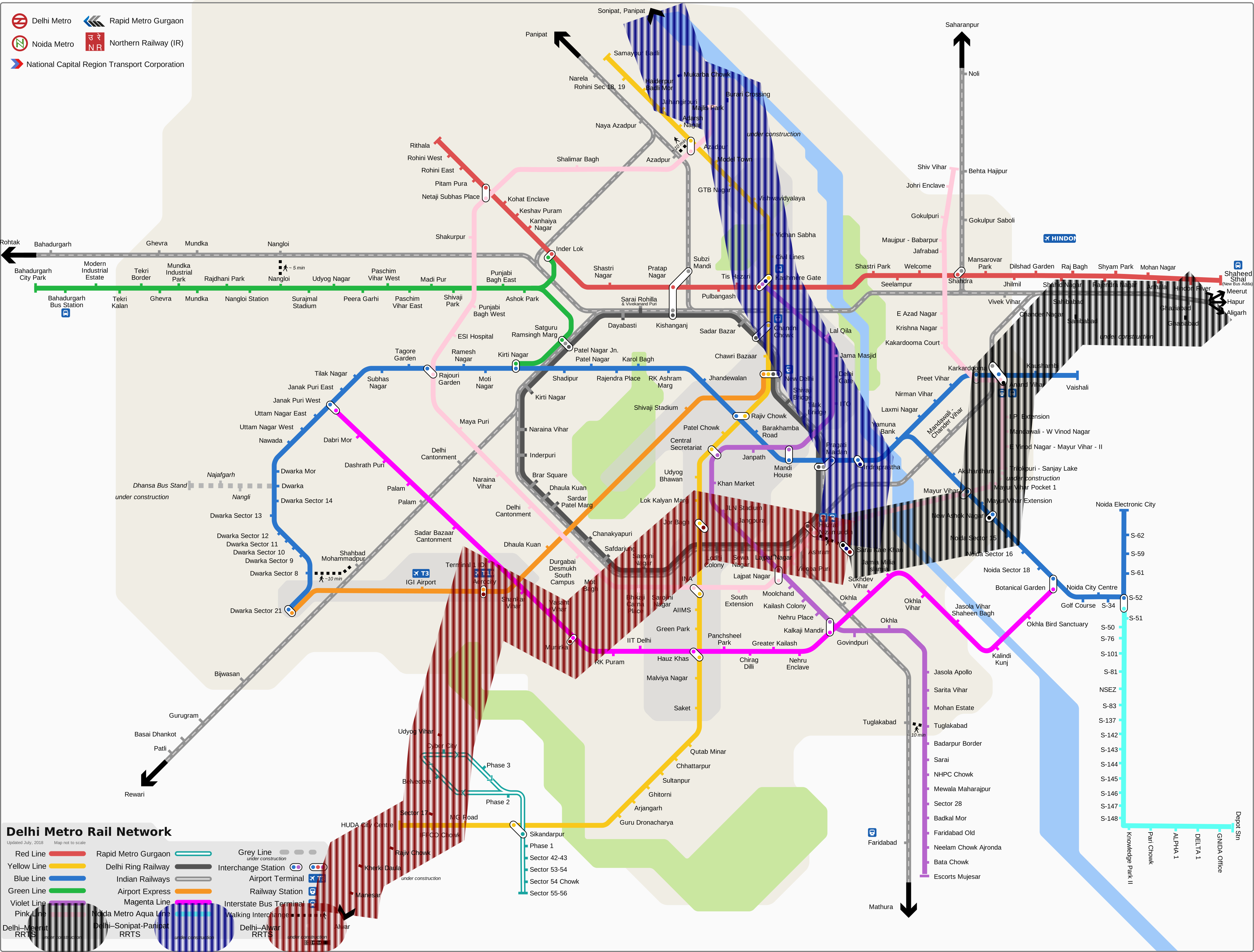
Meerut is served by the Delhi-Ghaziabad-Meerut Regional Rapid Transit System (RRTS), India's first high-speed regional rail network designed for intercity mobility rather than urban metro coverage. Operated by NCRTC, the RRTS runs at speeds of up to 180 km/h with a design speed of 160 km/h. The full corridor connects Sahibabad (near Delhi) to Meerut South and Modipuram. Stations in Meerut include Shatabdi Nagar, Begumpul, and Meerut South, with the Modipuram terminal at the northern end.
Key areas connected
Modipuram (northern Meerut, agricultural and residential zone), Modinagar North and South, Muradnagar (industrial), Arthala (Ghaziabad boundary), Meerut South (southern residential expansion), Shatabdi Nagar (residential), Begumpul (Meerut central adjacent zone), and Hapur Road junction.
Delhi and Ghaziabad RRTS connectivity
The RRTS connects Meerut to Delhi's Sahibabad station (where it intersects with the DMRC Red Line area) and continues to New Ashok Nagar / Anand Vihar zone. The end-to-end Delhi–Meerut RRTS journey takes approximately 55–60 minutes at full operational capacity — significantly faster than road (2–3 hours in traffic). RRTS stations are designed as standalone transit hubs with parking and feeder bus access.
Popular route searches
Meerut South to Sahibabad — RRTS south, primary Delhi-bound commute. Modipuram to Meerut South — RRTS south, intra-Meerut movement. Muradnagar to Begumpul — RRTS, Ghaziabad to Meerut urban zone. Shatabdi Nagar to Hapur Road — 2 stations.
Frequently Asked Questions (FAQs)
Essential questions answered about the Meerut Metro network.
How fast does the Delhi-Meerut RRTS operate? ▼
The RRTS trains operate at a design speed of 160 km/h with a maximum permissible speed of 180 km/h — significantly faster than conventional metro systems which typically operate at 80–90 km/h. The full Delhi–Meerut corridor is designed for a journey time of approximately 55–60 minutes compared to 2–3 hours by road.
Is the Meerut RRTS the same as a conventional city metro? ▼
No. The RRTS is a regional rapid transit system designed for intercity commuting rather than intra-city urban mobility. Station spacing is larger (typically 5–8 km apart) compared to metro systems (1–2 km). It prioritises intercity speed over dense urban coverage. NCRTC operates the RRTS, not DMRC.
Which Meerut RRTS station connects to the city centre? ▼
Begumpul RRTS Station is the closest station to Meerut's central zone, providing metro access to the Begum Pul area and Meerut's main commercial corridor. Shatabdi Nagar and Meerut South serve the residential and institutional south Meerut areas.